
This article was Originally published by Passa Parola
Looking back, what are the main lessons that the Genoa G8 taught news reporting in protest situations?
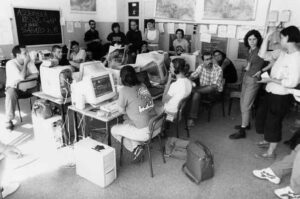 At Genoa, Independent media, social media and Citizen media came of age and was tested on a large scale. Hackivism – ie political hacking was also invented by Autistici Inventati/GCN. What made this possible in Indymedia’s unique design as compared to traditional news networks. The invention of the self publishing upload page fundamentally made the internet a two way street. Previously you had to have knowledge of code and building websites to say anything. Indymedia realized early on that whilst it was building a revolutionary democratic, movement based news network, it knew existing old media news networks would attempt to shut down Indymedia or try and ignore media developments on the internet. Please remember, Murdoch tried to have the internet banned so his empire was protected.
Because Indymedia positioned itself as a groundbreaking news website, a corporate media war broke out with numerous media organisations attempting to take indymedia to court in various countries. All of these attempts failed because Indymedia did not officially exist, had 2000 volunteer journalists operated out of people’s bedrooms and had 400 techie hackers looking after its security. This war lasted several years before the old media networks accepted defeat or went out of business. It also finally consumed indymedia as the next generation moved to other social media platforms and organising demos on whatsapp. The end of the corporate media wars during the time of occupy led to a huge swath of populations distrusting journalists and media in general. TV channels and conventional news networks like CNN and BBC face reducing numbers of viewers.
My own career as an indymedia UK journalist grew after Genoa to the point I became a global despatch editor with responsabilities for a number of indymedia website worldwide and I worked as an NUJ international conflict journalist and editor until early 2010 when I retired to spend time finally winning the Diaz case. Ultimately Indymedia at Genoa was at the centre of controversial change as the old media of the 90’s transitioned the new med of the 2010’s. As a footnote, Genoa and the investigation of human rights crimes led to the creation of citizen forensic investigation networks. Bellingcat and forensic architecture have investigated MH17 and the Bucha massacre.
Is there a phrase, an image or a sound from those days that still stays with you today?
I have been asked before this question, it is hard to pinpoint moments that I especially remember because Genoa was such an intense of riot, raid and torture events. Some of my favourite images came from the inside of indymedia and from the trials afterwards. It was a totally consuming project for 11 years to finish the genoa story and the raid on Diaz. What I remember most are the screams coming from Pertini after the second attack, as the police poured into the courtyard. There was also a moment, as the third attack was coming, when I realized I was going to die. Falling into a coma was like walking through a tunnel of light, and then nothing. The first attack stunned and immobilized me. The second attack, a few minutes later, caused enormous damage to my body. The third attack was the final blow, and then a 14-hour coma: the second attack broke my left hand… my entire rib cage on the left side was completely shattered. My spine was damaged, and I suffered massive internal bleeding. The third attack was nothing more or less than a splitting of my skull; the officer knew he would kill me, given the amount of force he used. Another kick to the mouth fractured or knocked out 16 of my teeth.
What advice would you give to young journalists who find themselves having to cover potentially violent demonstrations?
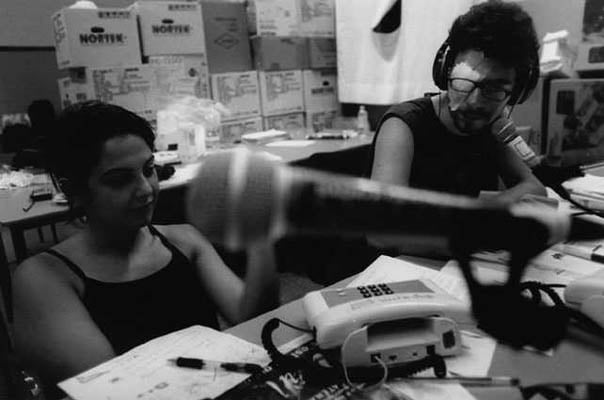
If media students wish to embark in a career of being an international conflict journalism or a combat photographer, going to riots is where you start your training. Media have to be readily identifiable as journalists, camera operator or photographer. You have to have enormous self awareness around yourself even when being narrow focused to get the video shot or photo. Organise a local guide with transport who can get you in and out of a location. A team should consist of a producer, photographer/camera and a third person to scan for other threats in the vicinity. You should always go to film or photo riots to get used to the sights and sound that you will encounter in a real warzone. If employed by a large global news network, you will get further training. Obtain a gas mask if possible. Know your limits and retreat if too dangerous. Your life is not worth a photo or a video unless you are Robert Cappa. Going from a classroom or your bedroom as an independent journalist can be a big shock the first time. To see violence and property damage on the scale of Genoa can be a shock first time.
Intervista di Paola Cairo – Photos: Mark Covell
Originally published by Passa Parola